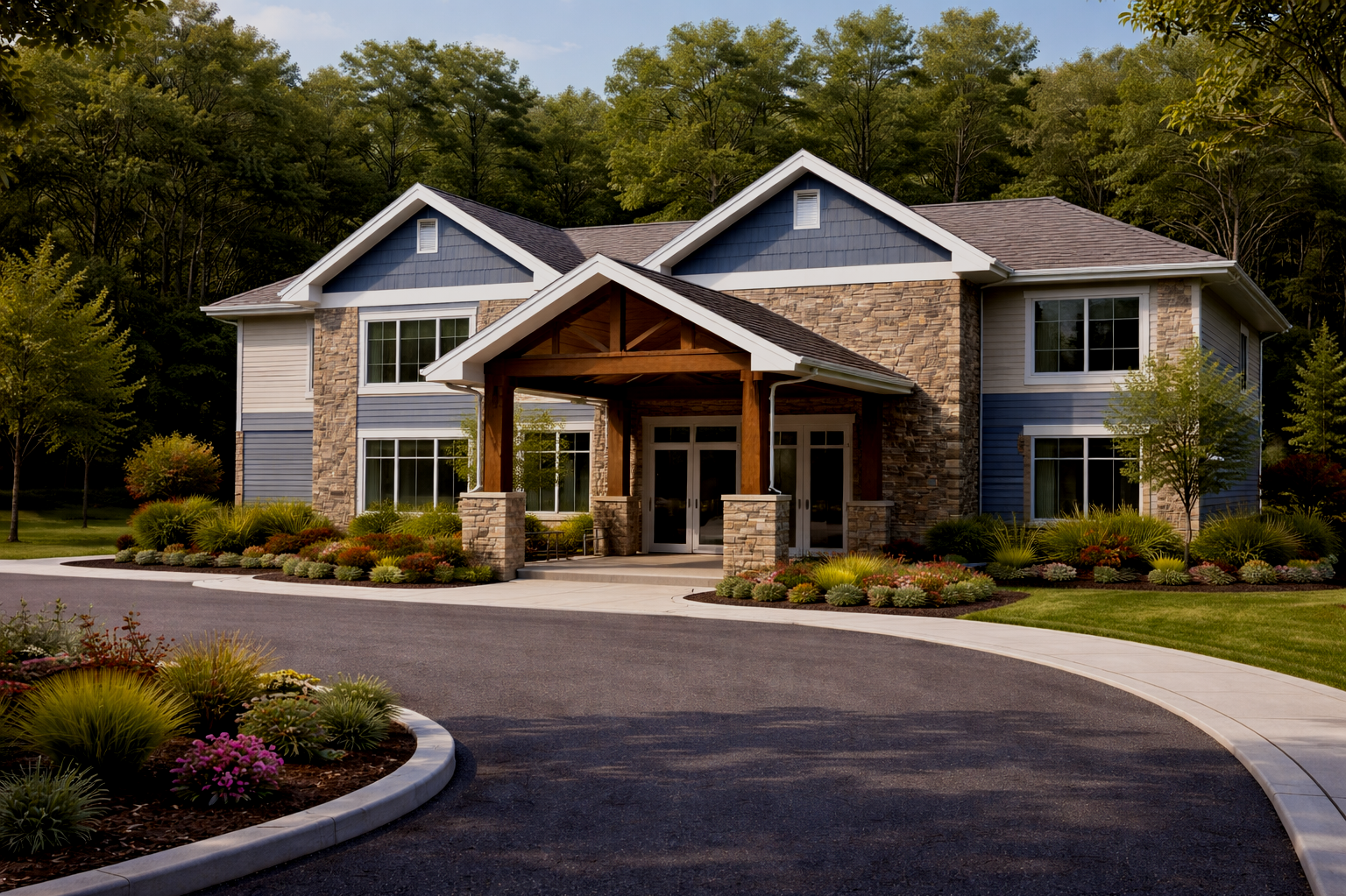
Residential Treatment Facility
for Adults
Take a brief tour to see what a Residential Treatment Facility for Adults looks like and how it provides a safe, structured environment where individuals can stabilize, build skills, and move forward.
Take a Look Inside
Supporting recovery, stability, and care close to home.
We’re working to change that!
The Lycoming‑Clinton Joinder Board Programs, which include the bi‑county Mental Health & Intellectual Disabilities Program and the bi‑county Behavioral HealthChoices Program, have contracted with PCS – Project Transition to develop and operate a 16‑bed Residential Treatment Facility for Adults (RTF‑A) to serve Lycoming and Clinton Counties.
This program helps people stay close to home while receiving the care they need.
Did you know there are currently no community residential mental health services available in Lycoming and Clinton Counties?
Have Questions?
We’ve got answers.


-
A Residential Treatment Facility for Adults (RTF-A) is a state-licensed mental health program that provides structured, supportive care in a residential setting.
It serves adults (18+) who need more support than a traditional group home, but do not require hospitalization.
This is not an institution or hospital—it is a place where individuals can stabilize, build skills, and work toward greater independence.We offer a range of solutions designed to meet your needs—whether you're just getting started or scaling something bigger. Everything is tailored to help you move forward with clarity and confidence.
-
No. Residents are not incarcerated and are not serving sentences. This program focuses on treatment and support, not punishment.
-
The building uses controlled access as a safety and therapeutic measure, which is allowed under Pennsylvania regulations.
This helps create a stable environment where individuals can focus on recovery—it is not about confinement or punishment.
-
Up to 16 adult residents will live here at any given time. These residents are adults who are already part of our region and connected to the mental health system.
Most individuals will be from our local counties, with a small number from nearby rural areas to ensure the program remains available when local residents need it.
-
No. This program is designed to serve local and nearby rural communities, not large urban areas.
-
No. Research consistently shows that residential mental health programs do not increase crime or reduce safety in neighborhoods.
In fact:
Mental illness accounts for less than 5% of violent acts
Individuals with mental illness are more likely to be victims than perpetrators
Providing supervised care actually reduces crisis situations and improves overall community safety.
Stable housing and access to treatment are associated with reduction in crisis events, emergency calls, incarceration, and repeat hospitalizations, all of which improve community safety overall.
Furthermore, this program has no effect on schools or children and serves adults only.
-
Safety is a top priority. The program includes:
24/7 awake, trained staff
Licensed clinicians (psychiatry, nursing, therapy)
De-escalation-focused, trauma-informed care
Ongoing state licensing and oversight
-
The program is overseen by:
Pennsylvania Department of Human Services licensing
County contracts
Insurance oversight
Internal quality and safety monitoring
Why This Program Is Needed
Over the past 20 years, reductions and flattening of Mental Health Base funding have resulted in the gradual loss of community residential services in both Lycoming and Clinton Counties. The last remaining CRR services ended in February 2026, leaving no community residential mental health services operating in either county.
The Lycoming‑Clinton Behavioral HealthChoices Reinvestment Committee identified residential treatment as a critical unmet local need and elected to use reinvestment funds to develop this service for the bi‑county.
Without services like RTF‑A, individuals often cycle through:
Emergency rooms
Incarceration related to untreated mental illness
Homelessness
Repeated short‑term hospitalizations
Obtaining community residential services from another county, often far from home
RTF‑A services help fill the gap between hospitalization and independent community living.